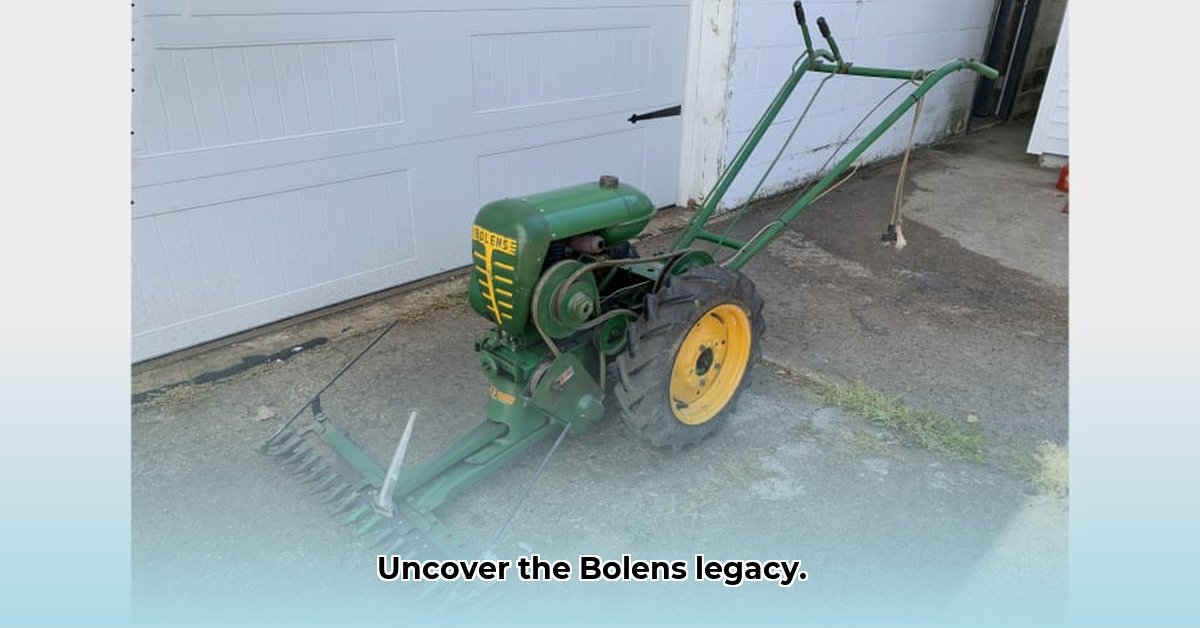
The Humble Beginnings of a Gardening Game-Changer
Imagine the early 1900s: backbreaking labor dominated farming and gardening. The Bolens walk-behind tractor emerged as a revolutionary solution, dramatically altering the relationship between people and their land. This wasn't merely about speed; it represented a fundamental shift in how land was cultivated. The prospect of exchanging hours of strenuous manual work for a machine capable of accomplishing the same tasks in a fraction of the time held immense appeal. For more information on vintage tractor brands, see this helpful resource.
More Than Just a Motor: Versatility that Defined Success
The brilliance of the Bolens walk-behind tractor lay not only in its power but also in its unparalleled versatility. Its simple yet ingenious design facilitated the use of numerous attachments. Therefore, it wasn't limited to tilling; it could plow, cultivate, mow, and even haul small loads. This adaptability, akin to a Swiss Army knife for farming and gardening, proved incredibly popular, making the Bolens a highly sought-after tool on farms and in home gardens nationwide. This versatility cemented its place in the market.
Selling the Dream: Smart Marketing for a Smart Machine
The early marketing strategies employed for the Bolens walk-behind tractor were remarkably effective. Rather than simply selling a machine, they marketed a better way of life. Advertisements strategically emphasized time saved, the elimination of back-breaking labor, and the resulting improvement in quality of life. While larger tractors dominated large-scale farming, Bolens cleverly targeted a distinct market: smaller farms and home gardeners previously lacking access to such technology. Their concise yet powerful message—"work smarter, not harder"—resonated deeply with their target audience.
Facing the Headwinds: Challenges and Changing Markets
Despite its initial success, the Bolens walk-behind tractor faced significant challenges. The post-World War II era witnessed the rise in popularity of larger, four-wheeled tractors, offering unmatched power. These behemoths were ideal for expansive farms but impractical for smaller operations. This shift, coupled with evolving consumer preferences, placed considerable pressure on Bolens. The company's ability to adapt to these changing market dynamics has remained a subject of ongoing debate among historians. Did they react quickly enough?
A Lasting Impact: The Bolens Legacy Continues
The impact of the Gilson Bolens company, despite its subsequent transformations, remains undeniable. The Bolens walk-behind tractor demonstrated that mechanization wasn't solely the domain of large corporations and extensive farms. It democratized access to powerful tools for smaller operations, significantly contributing to their success. Even today, its innovative spirit and practical design are lauded by collectors and enthusiasts. A Bolens transcends its status as a historical artifact; it symbolizes ingenuity and a bygone era of simpler living.
How Did Competition Affect the Decline of Gilson Bolens Garden Tractors?
Key Takeaways:
- Superior quality and versatility initially propelled Bolens tractors to success, but they eventually faced intense competition from brands with wider market reach and established dealer networks.
- Premium pricing, while reflecting superior build quality, limited its appeal to budget-conscious customers.
- Acquisitions and subsequent brand changes diluted the initial reputation for excellence.
- Shifts in American agriculture, particularly the decline of large-scale farming, diminished demand for the tractors.
The Bolens walk-behind tractor enjoyed a strong start, carving a niche for itself through its robust construction and adaptable design. This made it a popular choice among small farmers and home gardeners. However, its success was not solely attributed to product quality; strong regional brand recognition played a significant role. Despite this, it never achieved complete nationwide dominance.
The rise of competitors like Cub Cadet and Wheel Horse presented a formidable challenge. These companies possessed significantly wider distribution networks, resulting in easier access to parts, service, and overall customer support—areas where Bolens struggled. This readily available support was a considerable advantage for consumers.
Furthermore, the higher cost of Bolens tractors, compared to competitors like Sears/Roper, limited their accessibility, particularly among budget-conscious buyers. While the quality and longevity of Bolens products were undeniably superior, price proved a significant barrier to entry for potential purchasers.
The American agricultural landscape also underwent profound changes. The shift away from large-scale farming impacted the overall demand for walk-behind tractors. Smaller farms and home gardens continued to require equipment, but the overall volume was drastically reduced. This presented a major hurdle for Bolens to overcome.
The acquisition of Bolens by larger corporations further complicated matters. The brand's identity suffered, often accompanied by a decline in product quality. The dilution of what was once a strong and respectable brand name contributed notably to its eventual decline. The transition from Gilson-manufactured engines to Briggs & Stratton engines also had a measurable impact. While seemingly a simple supplier change, it highlighted a broader context in which engine technology was rapidly evolving. Bolens' ability to adapt to these technological advancements played a crucial role in its long-term competitiveness.
Despite its ultimate decline, the Bolens walk-behind tractor left an enduring legacy. Its sturdy build and loyal following demonstrate the enduring appeal of quality craftsmanship. Many collectors still seek out these machines, recognizing their historical significance. The story of Bolens poignantly illustrates that even high-quality products must navigate the complexities of shifting markets, intense competition, and rapid technological advancements to maintain long-term success. Its story is a compelling case study within the equipment market's dynamic evolution.